There was a short-lived restaurant in Manhattan called Burgers & Cupcakes. It sounded genius to me, but guess it didn’t work out. Maybe they should’ve gone for muffins.
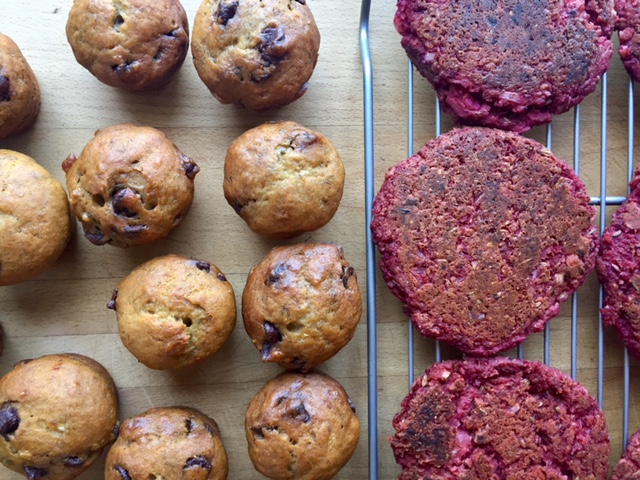
Last weekend, I had a rare burst of cooking energy. The burgers are an old favorite— I make a big double batch and freeze the patties so we have quick homemade veggie burgers at the ready. One big beet was plenty for a double batch. I pretty much follow the recipe except I had cashew butter instead of almond butter. For the beet-haters, I don’t find them too beet-y, so you may be ok. I took Isa’s advice and cooked them before cooling/freezing and that’s been much better. Another tip for busy folks— I cook the rice and lentils ahead of time, and then putting it all together is a snap on another day. This time day one was cooking rice and lentils, day 2 was shredding beets and assembling mixture, and day 3 (which was actually day 5 or something) was frying ’em up, cooling, freezing. Drawn out, but that’s the only way I get anything done anymore. Here’s the recipe for Isa Chandra’s beet burgers, and here’s a video of her making some, too! The recipe is also found in Isa Does It, which I highly recommend.
The muffins were new for us, but Jonah especially was an instant addict and I’ve already made a second batch. I followed the recipe almost exactly, but I reduced the oil and sugar from the original and it worked out great. I like to use the mini-muffin tins since it feels like you get so much more and it’s easy to grab one as a little snack.
Preheat oven to 350°F. Lightly grease muffin tins.
In medium size bowl, mix the flour, baking soda, and salt.
In a large bowl, mash up the bananas. Beat in the sugar and oil. Stir in the water and vanilla and mix thoroughly. Mix in the flour mixture. Stir in chocolate chips, and nuts if using.
Fill muffin tins about 2/3 full (or evenly between them) with the batter. Bake for 20-30 minutes, until they are golden brown and a toothpick inserted into the center comes out clean.
Yields 12 muffins, or 24 mini-muffins, or one 9″ cake or bread.
Another steamy August in the city, melting on the subway platforms. Maybe you’ve been able to get away, maybe not. Ten years ago, I was 9 months pregnant with my first, lumbering for my one hour commute to an unhappy job, ankles almost as swollen as my belly. Never knowing if someone would offer me a seat (usually a woman would).
It’s a cliché, but of course those 10 years have flown by and in just 11 days, I’ll be the mother of a 10 year old. To say that becoming a parent completely changes your life is an understatement. And I know there’s much more to come with this adventure!
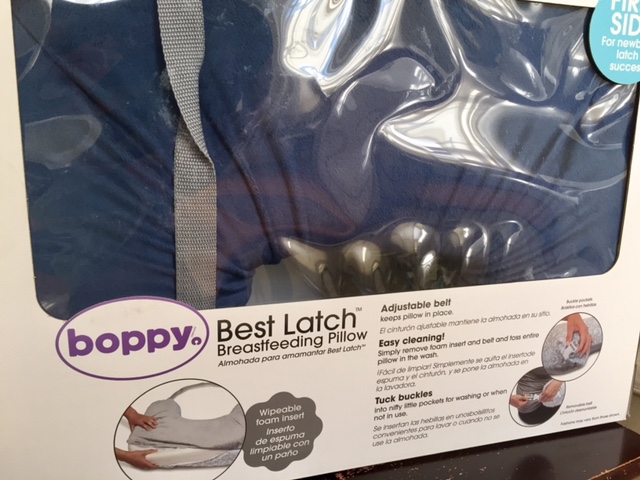
In honor of a decade of motherhood, surviving summer pregnancies, and the best city on earth, I’m offering this pretty Boppy Best Latch Breastfeeding Pillow to NYC residents! ($45 retail value) I love the modern navy pattern.
How to enter:
comment below and tell me why you love your NYC neighborhood! (I’ll bring the pillow to you or a friend in NYC if you win! Keepin’ it local!)
leave an additional comment for each social media follow— including your handle so I can double check! Twitter (@InfoChildbirth), Facebook, Instagram (@postmodern.childbirth), Google+, YouTube, and Pinterest!
leave an additional comment if you signed up for the newsletter!
finally, leave a comment for each time you shared on one of the social media platforms and where!
Guess we’ll see how much time you want to spend clicking around for a free pillow. Comments may be slow to post, don’t worry. Enter by August 14, and I’ll randomly select the winner on August 15, my son’s 10th birthday.
But wait, there’s more!
ADDITIONAL SPECIAL SUMMER OFFER!
Book your placenta encapsulation services before Labor Day (the holiday, not your actual labor day, ha ha), and receive $100 off placenta encapsulation + one belly binding session! $497 value for $397! Fine print— contract signed and deposit received by midnight September 4, 2017; any due date is fine (e.g. book now even if you’re due in December).
When you hear the word “luxury,” what typically comes to mind? Probably things like:
And when you think of necessity, maybe things like:
Maybe also high on the necessity list are things like fulfilling work or hobbies, some form of love/companionship, and a connection with nature or something spiritual:
Many will also see access to medical care, education, and a feeling of safety and security as human needs or rights.
In the small circle of birth work, there is some debate around whether a doula is a necessity that every birthing person should have the option to have, or a luxury service which while certainly nice, is far from necessary.
I asked the husband, “Is a doula a need?” He laughed and said, “Please. Any doula who thinks she is a necessity needs to get over herself.” Ok, that’s one point of view.
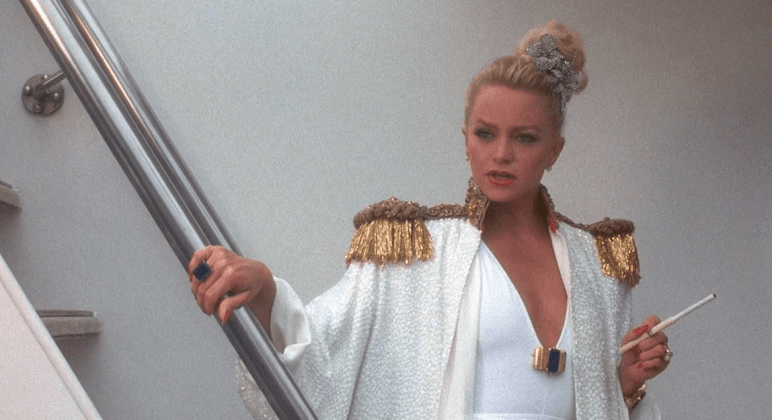
Yet, this is how the general public would likely answer, too. I’ve recently heard doula as a punchline in 4 different contexts. There were doula cracks in an Archer episode (below), a Duracell commercial (“… like your doula, who wants you to have a dolphin-assisted water birth.”), in Oh, Hello on Broadway (Gil Faizon is a “Tony Award viewing actor” who moonlights as an unlicensed doula and has a raccoon girlfriend), and in the 2016 Ali Wong Netflix comedy special (“I hired a doula. You know what a doula is? A white hippie witch that blows quinoa into your pussy to Keyser Soze all the pain away.” Note: I have not learned this technique. Yet.)
It’s great that “doula” is making its way into the mainstream lexicon, yet clearly it’s still seen as a silly indulgent thing that other people do.
Archer: What’s your Bishop Score?!
Lana: How should I…? Wait. How do you even know what a Bishop Score is?
Archer: I got certified as a doula, which, turns out, is not that hard.
Lana Kane handles her impromptu doula, Sterling Archer.
But really, which is it? Is a doula a necessity, a right? Or is a doula a luxury for the few who can afford one and a punchline for the rest of us?
My answer is YES.
No, this isn’t a cop out. In our either/or culture we often forget that sometimes BOTH possibilities are true. An oversimplified “debate” leaves out piles of nuance and information. As illustrated above, there is a lot of grey area between the extremes of luxury and necessity, and that grey area can vary a lot depending on one’s personal situation.
What are some good analogies? Organic food? I could say that everyone has a right to fresh, healthy organic produce. It’s good for your body and reduces your exposure to toxins. But is it really a necessity? Should organic farmers donate their food to those in need? Or maybe massage therapy? It can be therapeutic and healing to many, but is it a necessity? A college education gives you more options in life, but is it a necessity? A car can be a necessity, depending on where you live.
Ok, you say, BUT! Our healthcare system is AWFUL!! It’s a danger zone in there!!! Doulas are literally the only thing standing between a woman and a system designed to make her birth experience as terrible as possible!!!!
Our outcomes are shameful, just look up infant and maternal mortality rates by country. And what improves birth outcomes? The midwifery model of care and raising the status of women and girls. There are bigger things to attend to if we truly want to improve birth outcomes on a macro level. Doulas make a difference, but putting the responsibility to ‘save’ someone’s birth on a doula’s shoulders is unrealistic and unfair.
We know that doula support has many benefits, but they do come at a price and that’s where the necessity v. luxury question becomes important. Can we, as birth workers, provide support to all families regardless of their ability to pay? Is it reasonable to expect doulas to make themselves available to everyone, even for little or no pay? An unpaid or barely-paid doula is then paying to attend births, a significant investment.
The obstacles to quality doula support extend beyond the doulas themselves. As summarized on Birth by the Numbers:
Choices in Childbirth surveyed 111 doulas in New York City as well as held four focus groups. The cumulative findings of this research include:
Cost is the most significant barrier to obtaining doula services.
The doula workforce is small and less diverse than the population of New York City, with women of color under-represented as well as doula services in languages other than English, Spanish, or French.
Access to doula care in underserved communities is extremely limited.
Fostering collaborative relationships between doulas, maternity care providers, and nurses would improve the impact of doula care.
Establishing positive hospital policies would improve the impact of doula care.
Doulas need support for the work that they do, including models of doula service delivery that minimize stressors and difficulties.
When DONA (the oldest doula certifying organization in the US) was founded, their mission became “a doula for every woman who wants one.” That sounds wonderful! But the devil is in the details.
Whose responsibility is it to make sure that every woman who wants a doula can get one? This was never fleshed out and as a result, the assumption was that the doula should make the sacrifice to be available for as many pregnant people as possible. This likely happened for several reasons:
our views on money (money is inherently evil and taints any interactions it touches; birth and loving care should remain free of such base concerns)
a calling, labor of love (if you truly love what you do, money is irrelevant!)
our views on charity/giving/volunteering (being a selfless martyr is romanticized and venerated; women especially are expected to put others first), and that one’s training and profession should also be where they do their volunteering or charity work (you’re trained in this area so you should do it pro bono when possible)
our egos (it feels so good to be needed!)
Additionally, it was easier to shape the budding new doula culture, rather than the wider social norms and assumptions around birth and maternity care. Then immerse all of this in our sexist patriarchal world where female-dominated/nurturing professions, women’s work, emotional labor, and women’s bodies are not valued, and why invest in this sort of service?
Let’s take a closer look.
1. Money isn’t inherently good or evil. It’s a tool we use to exchange goods and services. And yes, it is a necessity. A pregnant person needs it to cover various medical and newborn essentials, and a doula needs it to compensate her time and professional expenses. Sure, it can feel good to do doula work, but warm fuzzy feelings still don’t pay the rent. Expecting doulas to work for little or free also promotes a lack of diversity in the doula community.
It benefits everyone when we treat ourselves, our work, and our time with respect and value. For better or worse, the main way to show value and respect in today’s world is with money.
2. Something can be your calling and you can be awesome at it and love it and being paid well doesn’t change any of that. These things don’t cancel each other out! This is an issue in the nonprofit world, too, and teaching. We have this weird assumption that if you are working to better the world, you should be content with low pay. This leads to resentment and burn-out of excellent talent. Everyone loses! Investing in great people is important and beneficial all around.
3. Volunteering—not everyone can afford to do it. It takes time and time is money. There are many ways to give back and you have to do what works for you and your family. Also, volunteering as a doula is unique. For example, if I volunteer at a homeless shelter a few hours a month, I can schedule it and make changes when necessary. Volunteering as a doula is very different—the demands of life on call, the unpredictability of when labor will start and how long it will last, prepping back-up and childcare, the intense emotional and physical toll—this makes volunteering as a doula a very different sort of commitment. Of course, it can be joyful. It’s still a tremendous undertaking.
4. And it’s important to check our egos. No one is irreplaceable, certainly not a doula. In Lamaze’s 6 Healthy Birth Practices, support is the necessity, not a doula.
So, how do we truly make birth better for parents and babies? Access to better evidence-based health care, growing the midwifery model of care, education, and access to contraception. More immediately, encouraging people to find a care provider and birth location that feels best for them, when options are possible.
And how can we make birth work sustainable for doulas?
good compensation—the ability to pay for business and personal needs comfortably and not burn out
a support network and positive relationships with other birth professionals
insurance reimbursement would increase access to doula care and help doulas make a living
different models of doula care, like hospital-based programs (e.g., working pre-scheduled shifts) or collectives and nonprofits such as Ancient Song or Operation Special Delivery, which are able to offer more affordable doula options to clients while still fairly compensating the doula for her work
The necessity for birthing parents is physical, emotional, and informational support for the birth experience. And one of the best ways (but certainly not the only way) to get this support is through hiring a doula—which is a luxury! As birth professionals, our goal should be to help create a reality that meets these needs without sacrificing our own health and livelihood in the process.








 postmodern childbirth